
Updated April 2026
We check DIY home energy guides against physics and kWh math, so you know what a ~$70 hardware store build can and cannot do.
Most households are paying 30-50% more on electricity than they were just 2 years ago.
The Problem
The average American household now spends over $2,000 per year on electricity — and rates keep climbing. Grid dependence leaves you vulnerable to price hikes, outages, and zero alternatives.
U.S. electricity prices have increased over 30% in the past five years. Utility companies face no real competition, and you have no leverage to negotiate.
When the grid goes down — storms, infrastructure failures, rolling blackouts — you are completely powerless. No lights, no phone charging, no refrigeration.
Rooftop solar costs $15,000-$30,000. Whole-home battery systems add thousands more. Most homeowners simply cannot afford the upfront investment.
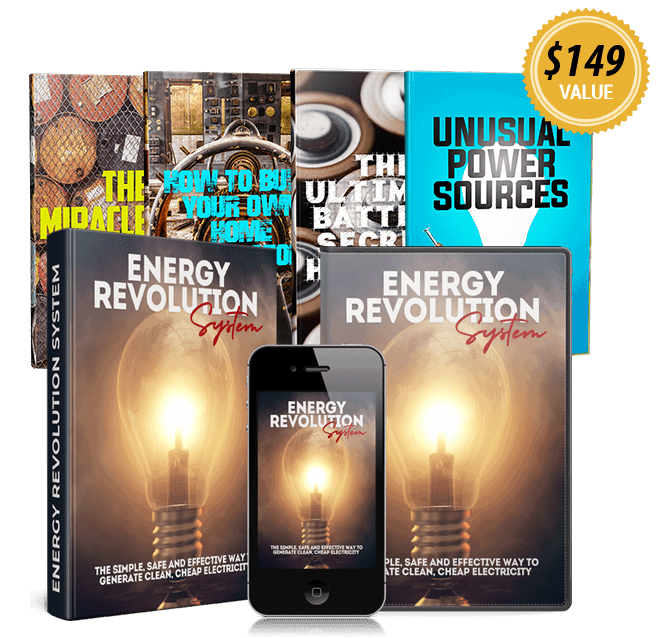
Want a hands-on project instead? The Energy Revolution System is a DIY coil-building guide that uses about $70 in materials. Any bill savings are unproven and a few dollars a month at most.
See the Guide →The Solution
You do not need an engineering degree or a five-figure budget. Modern DIY power guides put practical energy generation within reach of anyone willing to follow instructions and spend a weekend building.
Honest take: A tabletop DIY coil project will not eliminate your electric bill or replace your grid connection — any monthly bill savings are unproven and at best a few dollars a month on small LED/USB loads. What it does offer is a clear, beginner-accessible weekend electronics project backed by a 60-day ClickBank refund policy.
Ready to build your own? Our top-rated guide includes step-by-step instructions, video tutorials, and detailed blueprints.
See the Guide →Only one combined clear beginner blueprints and video walkthroughs
with ~$60–$80 in hardware store parts and ClickBank's 60-day refund guarantee.
Our Top Pick
After auditing documentation, parts lists, and refund policies, one guide stood above the rest for blueprint clarity and buyer protection.
 DIY Generator
 Solar Power
 Battery Backup
 Cost Savings

A complete DIY blueprint for building a portable home power generator inspired by Tesla's Bifilar Pancake Coil design.
Our honest assessment: The Energy Revolution System is a well-structured digital DIY blueprint with clear diagrams and step-by-step video support. Our primary criticism: the marketing claims you can cut your electric bill by 80%. Basic physics and kWh arithmetic show that a passive coil creates no net energy, and any real utility savings are unproven (a few dollars a month at most even for low-wattage LED/USB loads). Treat it as an educational weekend electronics project protected by ClickBank's 60-day guarantee, not a grid replacement.
Buyer's Guide
Not all home energy guides are created equal. Here is what separates a useful guide from a waste of money.
Look for step-by-step written directions paired with video tutorials. Vague overviews or text-only PDFs are red flags. You should be able to follow along without any prior electrical knowledge.
The best guides use parts you can buy at Home Depot or Lowe's for under $100. If a guide requires specialty components or expensive equipment, walk away.
Look for guides based on established electrical engineering — like Tesla's coil designs — rather than unproven "free energy" theories. Sound physics means reliable results.
Be wary of any guide promising to eliminate your electric bill. A good DIY generator supplements your grid power and provides backup. Claims of 80%+ savings are almost always exaggerated.
A legitimate guide will offer a refund policy. ClickBank products come with a standard 60-day guarantee, which gives you time to build, test, and decide if the product delivers.
Detailed blueprints and diagrams are essential. You need to see exactly what you are building, where each component goes, and how everything connects. No guesswork.
The Energy Revolution System checks every box. Clear instructions, cheap materials, Tesla-based design, and a 60-day guarantee.
See the Guide →Energy Guides
We investigate the claims, the product, and the refund policy to give you a straight answer on whether this guide is legitimate or a waste of money.
A plain-English breakdown of the science behind Tesla's 1894 Bifilar Pancake Coil design and how modern DIY generators put it to practical use.
Practical strategies for cutting your monthly power costs — from quick behavioral changes to DIY generation and smart home upgrades.
A side-by-side comparison of building your own solar setup versus a DIY generator — covering cost, difficulty, output, and long-term value.
Everything you need to know to start generating your own power — from understanding your energy needs to choosing the right DIY approach.
A head-to-head comparison of solar battery, portable gas generator, and DIY generator for home backup — covering cost, reliability, and runtime.
Everything you need to know about home battery backup in 2026 — from Tesla Powerwall to budget-friendly DIY alternatives and portable power stations.
Your complete checklist for before, during, and after a power outage — backup power options, food safety, supplies, and communication plans.
We compare 5 popular DIY generator builds by difficulty, cost, and power output to help you pick the right project for your skill level.
Full cost breakdown of every generator type in 2026 — from $120 DIY builds to $20,000+ whole-home standby systems, with 5-year total cost of ownership.
FAQ
It works as an educational tabletop DIY electronics and coil-winding project. The guide walks you through winding a flat two-wire coil based on Tesla's 1894 Bifilar Pancake Coil design (US Patent #512,340) for low-voltage LED or USB demonstration loads. However, a passive coil does not create energy out of nothing, and any utility bill savings are unproven (a few dollars a month at most, nowhere near the 80% reduction claimed in the marketing).
It is not a billing scam — it is a real digital DIY manual with step-by-step instructions and video tutorials sold through ClickBank, which enforces a 60-day money-back guarantee independently of the vendor. However, the marketing dramatically exaggerates potential electricity bill savings. Treat it as a beginner-accessible weekend hobby build, not a utility replacement.
Any monthly utility bill savings are unproven and would amount to a few dollars a month at most. Even a small 10–36W tabletop low-voltage circuit running around the clock equals at most ~26 kWh/month (roughly $4 to $5 per month at average US electricity rates), and a passive bifilar coil cannot generate free energy from nothing. Do not buy this guide expecting an 80% bill reduction.
The guide is designed for beginners with no electrical engineering background. It includes step-by-step written instructions, video tutorials, and detailed blueprints. Most people complete the build in 2 to 4 hours using basic household tools. If you have ever assembled furniture or done a simple home repair project, you have the skills to follow this guide.
The materials cost approximately $60 to $80 and can be purchased at Home Depot, Lowe's, or similar hardware stores. Everything you need is readily available — there are no specialty parts or hard-to-find components. Combined with the guide price of $49.97, your total project outlay is around $110 to $130.
Yes. The Energy Revolution System is sold through ClickBank, which offers a strict 60-day money-back guarantee on the digital guide. If you are not satisfied for any reason within 60 days of purchase, you can request a full refund directly through ClickBank.
The Energy Revolution System gives you step-by-step instructions, video tutorials, and detailed blueprints. Materials cost ~$60–$80 at any hardware store, and the digital guide is backed by ClickBank's 60-day money-back guarantee.
Get the Energy Revolution System — 60-Day GuaranteeDigital guide • Instant access • 60-day ClickBank guarantee
About This Site
Researched by VitalityEnergyLab -- independent reviews of DIY energy solutions, off-grid power systems, and home electricity savings.